
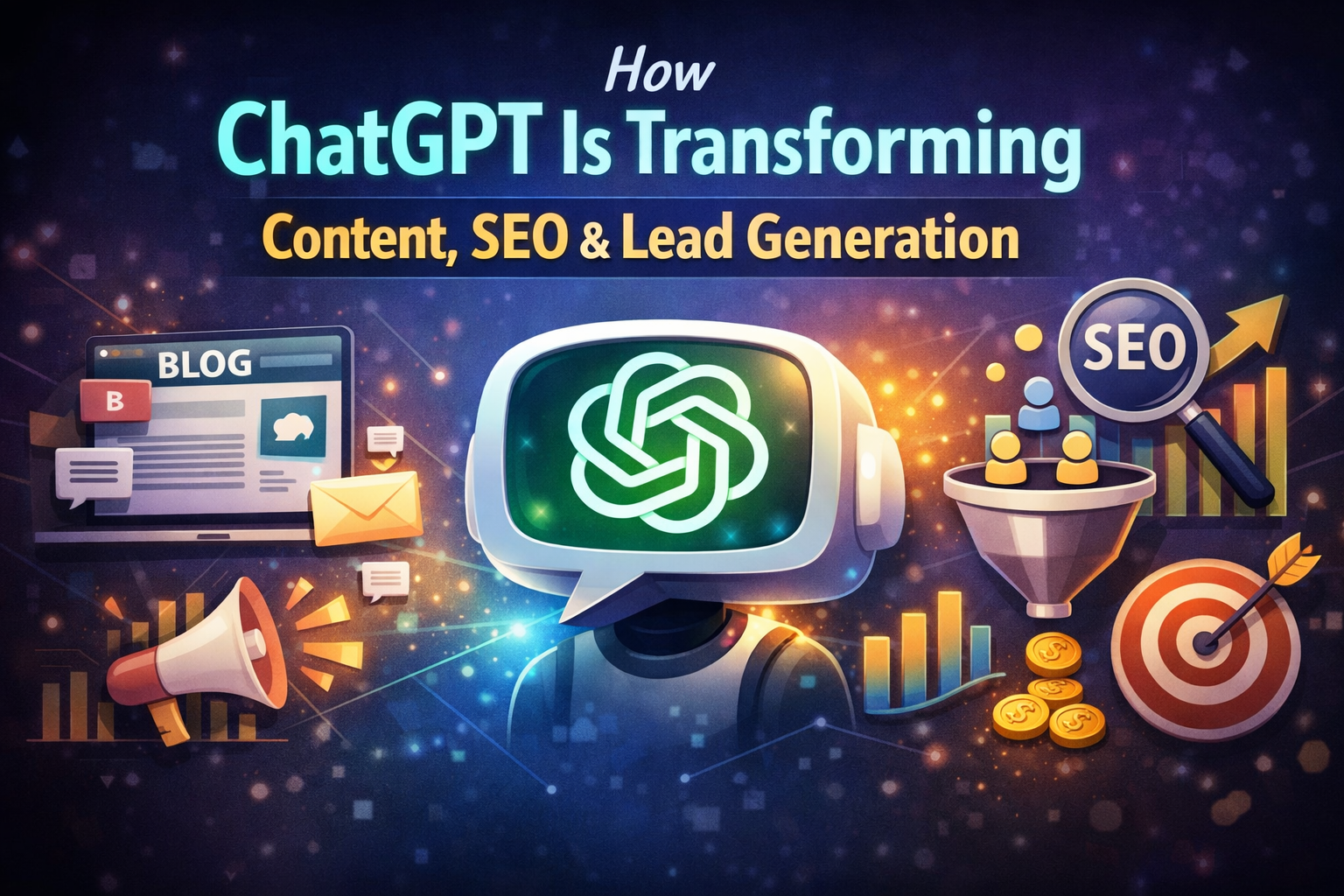
How ChatGPT Is Transforming Content, SEO & Lead Generation
In today’s fast-paced digital landscape, businesses are constantly seeking innovative ways to streamline their marketing efforts and enhance productivity. ChatGPT for marketing has emerged as a game-changer, offering companies an AI-driven solution that can dramatically transform content creation, SEO strategies, and lead generation. Let’s explore how ChatGPT is reshaping these critical aspects of modern marketing.
1. Revolutionizing Content Creation
Content is king in digital marketing, but creating high-quality, consistent content can be time-consuming and resource-heavy for most businesses. From ideation and research to writing, editing, and optimization, every piece of content demands effort. This is where ChatGPT for marketing becomes a powerful ally. By leveraging AI-driven capabilities, businesses can significantly reduce content creation time without compromising on quality or creativity.
ChatGPT enables marketers to produce a wide range of content formats—blog posts, website copy, social media captions, product descriptions, ad copies, and email campaigns—in a fraction of the usual turnaround time. It can help brainstorm fresh content ideas, structure blog outlines, draft engaging narratives, and adapt messaging for different platforms, all while maintaining a consistent brand voice.
Beyond creation, ChatGPT can also assist with refining content by improving readability, suggesting SEO-friendly phrasing, and aligning the tone with your target audience. Whether you need a quick blog outline, a detailed long-form article, or multiple content variations for A/B testing, ChatGPT empowers marketing teams to scale content production efficiently. The result is faster execution, better consistency, and more time for marketers to focus on strategy, creativity, and growth.
2. Enhancing SEO Strategies
SEO (Search Engine Optimization) is the backbone of online visibility, and ChatGPT is making it easier than ever for businesses to improve their search engine rankings. By incorporating ChatGPT for marketing, brands can generate SEO-friendly content that targets specific keywords, boosts organic traffic, and enhances overall user engagement.
ChatGPT excels in crafting meta titles, descriptions, and headers that are both compelling for users and optimized for search engines. It can also help structure content logically, ensuring better readability and improved on-page SEO performance. Additionally, ChatGPT assists in identifying keyword opportunities, suggesting related search terms, and refining content to match search intent—ultimately improving the quality, relevance, and discoverability of your digital content.
3. Boosting Lead Generation
Lead generation is a vital component of any marketing strategy, and ChatGPT can help automate and streamline the entire process, making it faster and more efficient. Whether you’re creating compelling lead magnets, generating personalized email responses, or qualifying prospects through AI-powered chatbots, ChatGPT for marketing simplifies and scales these tasks effortlessly.
For instance, ChatGPT can be integrated into landing pages or websites to engage visitors with real-time, personalized conversations. It can answer frequently asked questions, capture user details, segment leads based on intent, and guide prospects smoothly through different stages of the sales funnel. By delivering immediate, relevant, and consistent responses, ChatGPT not only improves user experience but also strengthens lead nurturing—ultimately increasing conversion rates and sales readiness.
4. Personalizing Marketing Efforts
Personalization is key to building stronger and more meaningful connections with customers. ChatGPT helps brands craft personalized messages, emails, and content based on user behavior, preferences, and interaction history. By analyzing previous conversations and engagement patterns, ChatGPT can suggest tailored content, product recommendations, or offers that resonate with individual users, making customers feel valued and understood.
This level of personalization allows brands to communicate more relevantly across multiple touchpoints—whether it’s a website, email campaign, or social media interaction. As a result, customer experience improves significantly, trust builds faster, and marketing efforts become more effective. Ultimately, personalized communication powered by ChatGPT drives higher engagement, better retention, and increased conversion rates.
Conclusion
ChatGPT for marketing is transforming the way businesses approach content creation, SEO, and lead generation. With its ability to produce high-quality content quickly, optimize SEO strategies, and enhance lead generation efforts, ChatGPT is becoming an indispensable tool for modern marketers. Embracing this AI-powered technology allows businesses to streamline their marketing workflows, increase productivity, and ultimately achieve better results.